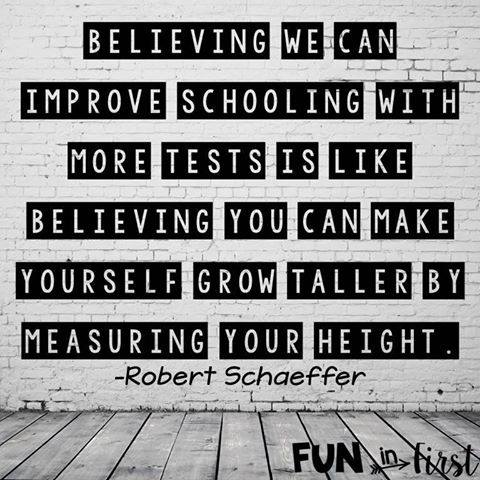
“Improve Test Scores, or else!” is not Education Reform

[A not-so-fond look back at the error of our educational ways during the Age of Accountability measures. Now that NCLB has been replaced by ESSA, how long will it be before the states move toward policies that allow assessment data to inform instruction rather than drive evaluation.]

The orders were clear and, at first blush, Sergeant Nickelby did not question them.

“Take your platoon and reconnoiter the town codenamed “Misfortune” prior to the arrival of the main force. Rumors are circulating that, in the chaos of enemy withdrawal, many families have been separated and your mission is to Leave No Child Behind.”

“This sounds simple enough!” the Sergeant said to his Corporal. “Perhaps a little good can come out of this mission and provide a little meaning in the absurdity of war.”

So, they packed up the gear in the troop carrier and set out.

It became immediately apparent, however, that leaving no child behind would be, at best, problematic. The enemy had taken all the adult “human capital” into forced labor, and the children had been on their own for some time. Sergeant Nickelby could not even get a firm count on the number of children, but there were many, many more than he and his men had the resources to handle. He got on the radio to the local commander.

“Major Shrub, there are too many children here for us to evacuate. We need some medical supplies, food, water and transports up here pronto…”

Major Shrub replied, “Line those children up and march them out of there on the double, hop to it!”

“But, Major Shrub!” the now befuddled Sergeant Nickelby began, “Some of these children no longer have any trust for us grown-ups, many are malnourished, some are ill, and still others are injured. Few, if any, of these children are prepared to keep up on a forced march.”

“Sergeant Nickelby, malingering is not permitted during this operation. Start physical training for the injured! Take their temperature and withhold milk and cookies from those with a fever. You are accountable for getting every one of those children where they need to be…”

Sergeant Nickelby could not believe his ears and, for the first time in his career, questioned the sanity of those in charge.

Major Shrub, growing increasingly impatient informed Sergeant Nickelby that if he could not accomplish this mission then he would be demoted, his men would receive fewer provisions and mercenaries would be brought in to replace them.

Sergeant Nickelby slammed down the headset, turned to his corporal and said, “This is no way to run a rescue effort!

…nor is it any way to regulate the Public Schools.


[I believe this Commentary originally appeared in the now defunct Prince George’s Journal in December of 2005.] 

A Test a Day Keeps Good Teaching at Bay!

nurse_readingWhen one is ill, one goes to the doctor for tests to be done.

The tests are not a cure for what ails you. A test is simply a diagnostic tool. After the test, some protocol (a change in diet, lifestyle, medication, or even surgical intervention) needs to be undertaken in the hope of alleviating the symptoms.

We would never assume that a test cures the disease it diagnoses.

Except, that is, in the field of education. Politicians and bureaucrats tend to invoke a mantra of accountability buzzwords to address our concerns about academic achievement as though fear and trepidation about new assessments will somehow magically inspire all our young people to achieve at heretofore-unimagined levels. However, if students are not getting motivated for tests and quizzes administered by their teachers, with whom they have a personal relationship in the classroom, what makes a politician or bureaucrat think that these students will suddenly find their motivation to excel on a one-size-fits-all test written by strangers?

This is but an introduction to a perplexing conundrum.

Mention standardized testing in a room full of teachers and the reaction is quite likely to be visceral. Many teachers have come to mistrust the motives of those who mandate tests and to question the competency of the psychometricians who create them, and at times, yes, even to doubt the relevancy of what is being measured.

Many teachers contend that this rage for standardized testing is not really about improving education. Improving education would mean decreasing class size, paying teachers competitive salaries and supplying those teachers with adequate resources. Mandating tests is more about appeasing the three-quarters of the electorate that does not have school-age children with the “appearance” of doing something to improve education.

Furthermore, teachers are growing weary of threats of further “accountability”  (read that: punishing schools and teachers that fail to raise test scores) while being systematically denied adequate resources and working conditions necessary to perform the task. We may as well adopt a policy that punishes employees for falling ill as a result of their employer placing them in unhealthy working conditions.

It is certainly not that teachers are against tests per se. Teachers, this writer included, have been known to administer rigorous exams. One colleague said a while back, “If I thought testing would improve my students’ performance, I’d give them a test every day.” But “standardized” tests will not improve educational outcomes. Improved instruction in scenarios more conducive to learning will.

What follows is a cautionary yarn about the outcomes of high-stakes testing. Let’s play a game called “So Who Wants to Get Into Graduate School?” Here is an actual question from an actual diagnostic exam administered at a local four-year institution. It is in the form of an analogy.

“Too” is to “Loose” as “Low” is to:
A) Also
B) Tight
C) High
D) Trek

How many otherwise exceptionally talented people might be denied access to higher education because they were unable to make the necessary link to Nineteenth Century French Impressionism and the painter Toulouse Lautrec, or some other set of equally trivial factoids? Granted, this is but one egregious example of cultural bias in the world of “Gotcha!” testing, but it may be the subtle, less-transparent biases that are truly the more dangerous.

Admittedly, no test will ever be perfectly unbiased. The very act of choosing a topic to be questioned is a form of bias. But many tests are not even close to being adequately screened for cultural bias.

For example, this writer sat for the French section of the National Teacher’s Exam in 1986. Not one mention was ever made of Rabelais, Montaigne, Corneille, Racine, Voltaire, Rousseau, Baudelaire, Zola, Sartre or Camus; all of whom were on the required reading list for a Master of Arts in French Literature. No, at the height of the Political Correctness craze, every selection was from authors relegated to the “the supplementary reading list” such as Colette, Sand, Duras, Senghor and Dadié, undeniably wonderful authors all, but hardly the mainstays of French Culture and Civilization and certainly not the primary focus of my instructional program.

A good score did not prevent me from being perturbed that the test writers were more interested in punishing the test takers for what they had not studied than in rewarding them for what they had mastered. One is reminded of a quote from Charles Colton “…the greatest fool may ask more than the wisest man can answer.”

Still, increasing awareness of bias and poor test design has resulted in significant improvements in our mass assessments. There is still a long way to go, but we appear headed in the right direction.

Of more concern to those involved in Public Education is the leaching of resources from classrooms by those fixated on the assessment of academic accomplishments.

First, these tests cost money. Standardized tests are, in fact, cash cows for the companies who design and grade them. Regrettably, for all this money we spend on these tests, the testing companies only tell us what we have, or have not, accomplished. A doctor does not just tell you that you are sick; he tells you how to get better. Unlike your doctor who tells you what you need to do to improve your health, the testing companies are not forthcoming about what classroom practices will facilitate improved cognitive development. What is garnered from all these millions funneled into standardized assessments?

The principal by-products remain finger pointing and blame-game scenarios.

While many teachers place their hard-earned dollars on the counter to buy such staples as pencils, papers and other supplies for their classrooms, the state mandates and funds standardized tests to the tune of millions of dollars. How many teachers, aides and counselors are sacrificed in the name of testing? How many textbooks, audio-visual supplies and computers are line item vetoed to pay for the design, administration and grading of standardized tests? Tests that in no way increase the yield of academic outcomes.

Second, testing has become a drain on the already overloaded educational calendar. We keep increasing the number of tasks our schools are to accomplish, but the number of hours in a school year has been virtually constant for over a century. Welcome to your neighborhood “Standardized Test Administration Center”!

While teachers contribute countless hours beyond the “contractual” day just to keep things running, they see their instructional program disrupted for days, and sometimes weeks, as they themselves become over-qualified test proctors instead of just underpaid teachers. Students and teachers, alike, are caught up in innumerable sessions of re-teaching concepts because for days-on-end half the class is somewhere else taking some mandated test. Over-testing has an irrevocably deleterious effect on the instructional program.

Let the Maryland State Department of Education go get the funds to bring in children and test them on as many Saturdays as they wish, but no more instructional time should be sacrificed on the altar of standardized assessments.

Our children do not need to be tested ad nauseum.  Students need every instructional minute that can be squeezed into a calendar.

Teachers do not need the results of “standardized” tests to write a prescription that will improve academic achievement. Educators need to assess learning in the classroom day-to-day , perhaps even a minute-by-minute. That may not be possible when three dozen “clients” are in the room.

Children need to interact with an energetic and committed teacher for more than 1.5 minutes per hour of instructional time. Children need instruction delivered in adequately resourced classrooms with adequate resources without the risk of becoming anonymous souls lost in the crowd. It is high time to return resources to the classroom instead of enriching for-profit educational testing companies.


[The original version of this Commentary appeared in the now defunct Prince George’s Journal in late January of 2001.]

No time for two steps forward and three steps back!

“An unjust law is a code that a majority inflicts on a minority that is not binding on itself. This is difference made legal.”   Letter from a Birmingham Jail Rev. Dr. Martin Luther King, Jr.

Ultimately, how our state chooses to address the educational needs of all children concerns us not only as citizens, but as immortal beings. Our fates are wrapped up in the fates of the most powerless among us, those who cannot vote. True equity and adequacy of educational opportunity for all children is in both the spirit and the letter of the Bridge to Excellence Act. However, it must be noted that the Free State still allows “difference” to be made legal in the schoolhouse and it would honor Dr. King’s memory if that could be changed.

Because “class size” is not classified a “working condition” in the state of Maryland, neighboring school systems can have different staffing ratios that create vastly different learning environments for children. Equity does not exist when our school system can only afford to hire forty-seven teachers per thousand students and their school system is able to afford more than sixty teachers per thousand. Delivering instruction to thirty-plus economically disadvantaged students will never be the same job as teaching twenty, or fewer, affluent students with access to a superfluity of resources.

Nor is there adequacy when our school system must choose gasoline for the school buses OR books for the media center and their school system manages to budget for both. Such inequities have existed in Maryland for decades and the cascade of effects all roll down on student achievement as a result of teacher burnout and teacher turnover in the understaffed and inadequately equipped jurisdictions.

Half a century after Brown vs. the Board of Education, it is simply unconscionable that this society permits children-of-color and children-of-poverty to attend schools that are ill-prepared to deliver the services mandated by both the state and the nation and that misguided business model accountability measures threaten to do even further harm. This practice constitutes “difference made legal”.

It is no longer a mystery that the most effective schools tend to be blessed with greater resources – both human and material – the only mystery is why our political structure cannot achieve consensus on how to make those resources available to every child in every school. This despite the mandate of Article 8 in the Constitution of Maryland “The General Assembly, at its First Session after the adoption of this Constitution, shall by Law establish throughout the State a thorough and efficient System of Free Public Schools; and shall provide by taxation, or otherwise, for their maintenance.”

The passion that helped fill the streets of Annapolis in support of the Thornton recommendations must be rekindled, and we must call on our legislators to have the courage to stand for all children. Article 8, too, is a promissory note, not unlike the one described in Dr. King’s most famous speech. Maryland has made great strides in moving toward equity in the schoolhouse, though to be truly just on the moral plane, a thorough and efficient system of free public schools must render “sameness” legal for all parties.


[The original version of this Commentary appeared in the Prince George’s Gazette in 2015.]

Proctoring the Pre-test to the Practice Test before the Standardized Test?

At the commemoration of the 50th anniversary of Bloody Sunday in Selma, the oratory of President Obama achieved inspirational heights! His comment about educational opportunity was incisive, “…we do expect equal opportunity, and if we really mean it, if we’re willing to sacrifice for it, then we can make sure every child gets an education suitable to this new century…”

The overwhelming majority of those who devote their lives to children fondly embrace the sentiment expressed in that rhetoric. However, we also wish that fewer plutocrats and oligarchs had the President’s ear when the subject becomes how best to achieve that goal.

Business-model accountability measures are effectively strangling Public Education.

Even a cursory examination of the data from 2000-2012 suggests that NCLB/RTT have been abysmal failures as education reform policy. It also confirms what the education community knew all along: our nation has done little to reverse what Jonathan Kozol called the Savage Inequalities in schools that serve economically-disadvantaged students.

As for closing what is becoming known as the Poverty Gap in academic achievement, more than a decade of the “test and punish” philosophy has failed to move the needle one iota. That gap has actually widened. The assessment craze has resulted, however, in much improved profit margins for testing companies and purveyors of curricula.

Every year, the disruption to the school calendar increases as schools cede ever more days to the delivery of federal & state mandated assessments. The testing schedule in Prince George’s County now comprises four pages and, nationally, school systems average 51 days of testing each year. Factor in “test-preparation” and interface training for the new, computerized PARCC platform and at least one-third of the school year is consumed by assessment related activities.

At a recent televised meeting of the PGCPS Board of Education meeting, a member of the Board asked if the system has any special activities planned to mark “Math Month” in April. Within seconds my iPhone buzzed with an incoming text message from a rank-and-file teacher. It said, “Sure, more tests.”

How could the sacrifice of so much time from teaching-and-learning reasonably be expected to improve student achievement?


[This commentary originally appeared in the now defunct Prince George’s Gazette on 3/26/2015.]

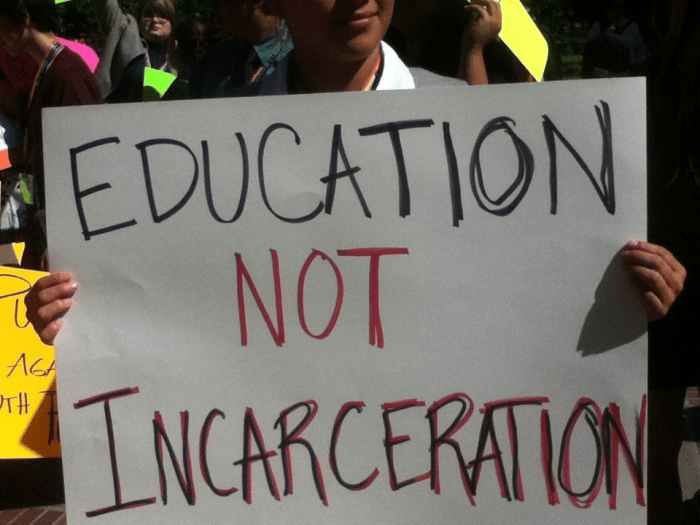
Increasing focus on schools decreases use of prisons

prison2pipe

To paraphrase the catchphrase from David Simon’s gritty portrayal of a year-in-the-life of a Baltimore detective squad: “The perpetrator is almost always poorly educated.”

Consider for just a moment this tidbit from the Department of Justice’s Bureau of Statistics: “About 41% of inmates in the Nation’s State and Federal prisons and local jails in 1997 and 31% of probationers had not completed high school or its equivalent.”

Compare that to the approximately 18% of the general population that does not graduate from High School and it suggests a strong correlation between the abandonment of educational pursuits and the commission of crimes punishable by incarceration. Only about one-third of those serving time behind bars obtain high school diplomas while imprisoned.

Studies also indicate a strong correlation between low educational attainment and criminal recidivism. This is a by-product of failing to meet the needs of the 1-in-5 socio-economically disadvantaged children that attend our public schools.

California spent $62,000 per prison inmate last year, no doubt much of the spending budgeted for remediation of reading and math skills. How many potential inmates might avoid poor life choices if spending in the public schools exceeded, by just a little, the current $9,600 per pupil on the left coast?

Nationally, we average about $5.00 per inmate for every $1.00 spent on children in school. How has our nation become so penny wise about education and pound foolish about rehabilitation?

Conservatives and Liberals need to unite around the cause of Public Education as the foundation of a sane and rational society. Investing in the welfare of all children and prioritizing education spending would likely decrease expenditures for prisons in the long run.

Might it be more cost effective if we, together, closed the valves in the schools-to-prison pipeline by hiring teachers instead of turnkeys? Our nation seems, instead, to have forsaken the wisdom of Frederick Douglass who wrote a century and half ago, “It is easier to build strong children than to repair broken men.”

Further Reading…

[This Commentary originally appeared in the now defunct Prince George’s Gazette on October 2, 2014.]

True equity has yet to be achieved in the schoolhouse

SCOTUSOur nation is six decades removed from Brown v. The Topeka Board of Education, the landmark Supreme Court ruling that ordered school desegregation to proceed with “all deliberate speed” based partially on the logic that separate is inherently unequal.

Nearly a decade later in his “I Have a Dream” speech, the Rev. Dr. Martin Luther King Jr. urged us to contemplate the “fierce urgency of now” and to avoid succumbing to the status quo of “gradualism”.

Those phrases suggest concern that those implementing the desegregation order had chosen the third alternative definitions of the adjective “deliberate,” as in: done or acting in a careful and unhurried way.

At the commemorative event of the 50th anniversary of that great oration, an elderly gentleman carried a placard that said, “50 years later and I’m still protesting this s*#t.”

Half a century later, de facto geographic and economic segregation still exists. True equity has yet to be achieved in the schoolhouse. More than 20% of our children live in poverty and attend schools that are ill-equipped to break the cycle of poverty.

We are forced to wonder where Dr. King would fall in today’s debates about education, but he left us some clues…

On March 14, 1964, Dr. King accepted the John Dewey Award from the United Federation of Teachers and declared, “The richest nation on Earth has never allocated enough resources to build sufficient schools, to compensate adequately its teachers, and to surround them with the prestige our work justifies. We squander funds on highways, on the frenetic pursuit of recreation, on the overabundance of overkill armament, but we pauperize education.”

Can we talk some more, please, about that “fierce urgency of now“.

Further Reading: The Prince George’s Sentinel

[This commentary appeared originally in the now defunct Prince George’s Gazette on January 16, 2014.]

The ABC’s of Teacher Turnover

Walking a mile in the shoes of a rank-and-file public school teacher is not generally an option for the public, but understanding the challenges confronted by professional educators might serve to elevate the public discourse on the topic of improving our schools. Grasping the complexity and intensity of the teaching experience is critical to moving the debate about allocating appropriate human and material resources to the education of all children.

      Imagine yourself as a teacher. You enter your classroom to look out on a sea of more than thirty faces. A few smiles;  a few frowns;  too few students seem actively engaged in your agenda as heads are already pressed down on the desk before instruction even begins. None seem particularly enthused about the task at hand as you walk them through the warm-up. One student sighs when you begin to give the directions. A few classmates perform compliance rituals but intellectual focus is not observable. The ten minute homework assignment, if completed, is partial and poorly written. Your students recall little from yesterday’s lesson. You help the three who were absent to catch up. Three more are absent today.

     For the next fifty minutes you aspire to fulfill your role as a purveyor of knowledge, as a shaper of young minds, as an architect of America’s future. But, instead of conveying knowledge you must spend ten to fifteen minutes addressing classroom management issues (i.e. student disputes, off-task behavior, outright misbehavior, passes, transitions, etc). You are interrupted a handful of times : knocks at the door, the public address system, boisterous hall walkers.  Ironically, you think to yourself, “Today’s lesson is going fairly well…”

Now imagine that for a few minutes you are telepathic and can divine the mostly-unspoken inner secrets of your students. Nothing can really prepare the casual observer for the sheer tally of emotional baggage that arrives in any given classroom room each and every day …

(Each of these caricatures is based on an actual student. The names have been changed to protect the innocent.)

  • Allen is a teenage alcoholic.
  • Betty is regularly beaten.
  • Christine is a “cutter” and cannot be trusted with sharps.
  • Diane has dyslexia.
  • Elaine is an emancipated adult.
  • Frank carries a firearm.
  • Greg & Gina are bullied for being openly gay .
  • Harry is HIV positive; Harriet is homeless.
  • Irene is an illegal alien (and evading the INS!)
  • Jay was released from jail in June.
  • Kevin’s brother  was killed in a drive-by.
  • Larry has been a  latch-key child since the second grade.
  • Mary was molested by her stepfather.
  • Nadine appears narcoleptic.
  • Oscar is an orphan in foster care.
  • Pam is pregnant (again!)
  • Quinton is quitting school.
  • Rachel has been raped.
  • Steve is suicidal; Sylvia is into substance abuse.
  • Thomas is twenty and still in high school. 
  • Ursula is unruly.
  • Vickie lost her virginity at eleven.
  • Warren works full-time to help the family.
  • Xavier is uninsured, but needs x-rays.
  • Yvette cares for her five younger siblings.
  • …and Zoe has a 0.0 GPA.

-Thirty children.

-Thirty challenges.

-This is your smallest class.

A feeling of dread mounts as you entertain the thought that you have six such classes on your caseload, and realize that you will never know all the baggage that your students transport to class. You may find yourself experiencing a twinge of guilt for no longer wanting to know. With caseloads approaching 500 students, how much support will the guidance counselors and administration provide?

     Few professions can claim to have a more altruistic labor base than teaching. Teachers want to teach. Teachers dream of planning and presenting perfect lessons. They seek to motivate learners. They aspire to hold learners accountable for their learning and relish the reward of student work demonstrating growth over time. 

 Go to your child’s school and spend an entire school day. Be sure to arrive at 6 a.m. and leave at 9 p.m. You will find teachers and administrators who arrive hours early and depart hours late. Teachers sponsor clubs; coach sports; offer tutoring; correct never-ending stacks of papers late into the night; prepare lesson plans outside the contract day; inform parents of their child’s progress; coax, cajole, inspire, beg and plead in the hope of getting students to learn. Then, they attempt to comply with the directives to personalize all their lesson plans to address the needs of each individual student. If they are fortunate,  they will accomplish some small portion of the task in their “copious” planning time of a so-called 50 uninterrupted minutes. More likely, however, they will polish a lesson plan, correct one class set of papers, call parents,  confer with colleagues, update records, write disciplinary referrals and, hopefully, find time to address biological needs.

And, all this educators do for a yearly salary that would not inspire loyalty in a good car mechanic. 

The realization soon sets in: This work is never finished! Even if a teacher were able to devote 24/7 to the profession, the “to do” list would never grow shorter. The question then becomes: What portion of your personal life do you sacrifice for the greater good?  Unfortunately, it will NOT be the part time job you took to make ends meet. Nor will it be the coursework for your Master’s that you must complete (and fund!) to maintain your teaching license.

In the 1980’s John I. Goodlad reported in  A Place Called School  that the top 50% of teaching candidates -as measured by class-rank and GPA –  leave the profession within seven years.  How can this be?  When did teaching become an avocation instead of a vocation?

The reasons are many.  But according to Goodlad, while money was not even listed as a priority for choosing the profession, it rose to second place on the list as a reason for abandoning it. Working conditions were first. Teaching is now considered a stepping stone on the career track; time in the classroom has evolved into little more than a résumé enhancer.

The first round of departures are generally the “pie-in-sky” idealists. They are usually novices. They are often under the impression that teaching will be fun.  It is not too long before all those holidays are simply time to catch up.  Sometimes it can be something simple that sends them packing… Perhaps a student requests they perform an anatomically impossible act…  Perhaps an entire class refuses to complete assignments…  Perhaps it will be a student load that approaches 200 and a belief that they must correct every student paper… 

In a macabre ritual reminiscent of the first-night in The Shawshank Redemption, senior teachers have been known to run winner-take-all “pools” based on the date and/or person to first resign. There is quite often a winner in the first weeks of the school year.  One year, the first resignation occurred before the pool could be formed; another year, a prospective teacher signed a contract, then investigated the reputation of the school in question, and failed to report for duty.  Seldom does a year go by that some novice educator fails to wave the white flag before the first holiday break. How can a someone spend four years or more preparing for a career and still not be aware of what they will encounter?

The novices are followed closely by the mercenaries. The mercenaries quickly calculate the grossly inadequate economic return for the energy expended in challenging educational scenarios. These teacher candidates sometimes find another school system with higher pay scales. Often, super-qualified and highly sought after,  someone in private industry makes an offer that doubles and sometimes triples their current salary.  Au revoir les enfants! Greener pastures beckon!  Who can blame them? It is no small challenge to raise a family on the wages offered beginning teachers. 

In the range of two-to-six years come the first wave of premature burnout victims.  This last stage of early departures is usually the direct result of other life priorities. Usually, these individuals have been committing the time it takes to perform the job of educating their students. The seventy-hour work week of the first-year teacher has dwindled down to the fifty-five hour week of the more experienced crew, but there is little room for improvement beyond that.  Suddenly, they find themselves no longer able to do the job.   Marriage is proposed; a child is born; a parent becomes ill; the job of teaching well becomes an untenable burden instead of a joy. Teaching is a joy until life happens.

Who decides to stay for the long run?  Altruists for whom money is not of primary importance and who understand the importance of education to the next generation. Specialists for whom the passion for  an intellectual discipline affords fewer opportunities in the private sector.  Pragmatists who, if not entirely accepting of what they can not change, are at least able to discover ways to work around the barriers. 

Even the best of these will get worn down eventually. No matter how committed, no matter how much you love the job,  weariness is inevitable.  Thus begins the quest for short-cuts where,  at least occasionally,  one succumbs to the temptation is to teach to the lowest-common-denominator.

Our society pays much lip-service to the importance of education in our democratic society.  To date we have only talked the talk; we have yet to demonstrate a collective willingness to walk the walk.  Never forget that the intellect of a child is a fragile seed hoping to land on fertile soil.  We can no longer afford to lose half to barren ground.  It is up to all of us to turn and amend that soil to give the seeds of intellect a chance to grow.  Teachers want only the tools and sufficient time to turn that soil, because teachers really are the gardeners of humankind. We must commit the resources necessary for the education of all children. To quote Mikhail Gorbachev, “God will not forgive us if we fail.”


[This is a much revised version of my first commentary in the now defunct Prince George’s Journal. The original version, much longer, appeared circa 1998.]

Heavy load puts teacher retention at risk

Considering all the positive outcomes arising from our public schools in recent years, it is somewhat disheartening to see the issue of turnover rearing its ugly head once more. All our advances will be for naught if this community fails to entice educators to spend their careers right here.

How has it come to this, again?

A nearly completed career in public education leads me to a single, inescapable conclusion. Call this Haines’ law: Systems of labor requiring unsustainable effort can never be taken to scale. 

Teachers quickly realize that the assigned goal of reaching every child requires the deployment of nearly every waking hour to the preparation, delivery and evaluation of instruction. The persistent call of “Teacher Do More!” plays quite poorly to those dedicated altruists who already devote nearly their entire existence to improving the lives of children.

Valiant efforts do occur. Those stories can be inspirational, even transformational, but they have yet to be proven sustainable over time in the public schools, especially in public schools where poverty is prevalent.

Periodically, anomalous improvements in academic performance are generated in challenged schools. Such results most often involve a charismatic leader who inspires educators to heroic efforts on behalf of children.

Much-ballyhooed successes invariably lead to promotions and transfers of valuable personnel in the attempt to seed other sites in the hope of generating like results.

Most frequently, in just a handful of years, such success stories begin the inexorable slide back to the mean. Simply put, there are limits to human endurance and patience. Heroism arises occasionally in extraordinary circumstances. It cannot be sustained as a workload or lifestyle.

In this age of increased scrutiny and accountability for educators, there will be some who ridicule the idea that teachers are assigned an unreasonable number of tasks to perform on any given day. Educators, however, know that the design and delivery of effective instruction too often becomes an afterthought on the administrative flow chart.

If this community fails to support and empower our highly performing teachers, those instructional leaders certainly will be the ones to seek out employers who will. It will be our children who suffer form our failure to learn form past mistakes.

Further Reading @ The Prince George’s Sentinel


[This Commentary originally appeared in the now defunct Prince George’s Gazette on January 31, 2013.]


Humanity must beat its swords into ploughshares…

defensespending“A nation that continues year after year to spend more money on military defense than on programs of social uplift is approaching spiritual doom.” Reverend Dr. Martin Luther King, Jr.
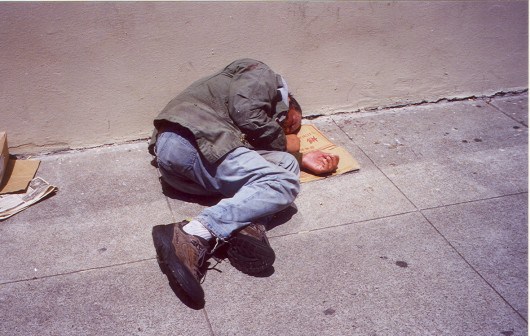
Not much has changed since the sixties.

Annually, this nation continues to spend on defense more than the next six most militarized nations, combined. Congress has allocated $1.5 trillion for the F-35, alone. This fighter jet may never be safe to fly and its gunnery may not be fired prior to 2019 while awaiting software fixes, but the merchants-of-death-from-above are doing quite well, thank you!

We could likely end world hunger by allocating $1.5 trillion to that effort.

Which program would generate more good will and likely promote world peace?

In the meantime, too many of our own veterans end up sleeping on vents and under bridges; too many of our families can be bankrupted by one health crisis; too many of our workers toil too hard for too little reward; too many of our children still attend schools that are poorly resourced.

How can this happen in the country that, overall, boasts the “highest” quality of life ever attained?

The answer is simple: too many of the powerful and privileged have chosen personal profit over the public welfare, and we, caught up in our daily struggle to thrive, have allowed acquired wealth to consolidate tremendous political power in the hands of a far too greedy few.

In his final book, Where Do We Go From Here: Chaos, or Community? Dr. King offered us a different vision when he wrote, “The dignity of the individual will flourish when the decisions concerning his life are in his own hands, when he has the assurance that his income is stable and certain, and when he knows that he has the means to seek self-improvement.”

What is the first step toward achieving dignity for all and ending intergenerational inequity? We must ensure the effective education of all our children lest another generation becomes grist for the mill.


[This commentary originally appeared in the now defunct Prince George’s Gazette in January 2015. The graphic for “worldwide defense spending” is available on line.]

Quiet tragedies persist in schools…

“All too many of those who live in affluent America ignore those who exist in poor America; in doing so, the affluent Americans will eventually have to face themselves with the question that [Nazi death-camp supervisor Adolf] Eichmann chose to ignore: How responsible am I for the well-being of my fellows?”  Martin Luther King, Jr.

Since the first application of what Arnold Toynbee referred to as “the thin veneer of civilization”, humankind has struggled with the idea of subjugating the desires of the individual to those of the community.

Self-preservation is almost universally hard-wired and true empathy is too rarely experienced. The motivation for most humans action is self-interest followed closely by our genetic programming  to assure the survival of our offspring and family members. Generosity becomes increasingly  difficult when addressing the needs of neighbors, the nation or the entire species.

Humans show promise, at times, as the events of recent months demonstrate. However, the pride inspired by our collective response to noisy tragedies such as the felling of the World Trade Center must be tempered by our acquiescence before the quiet tragedies of own  making.

As a nation and as a community we largely abdicate our responsibility to provide and adequate and equitable  education for the children of the poor. We turn a blind eye to the plight of latchkey children sitting in over-crowded, poorly-equipped classrooms staffed by overworked and underpaid teachers.

We are to quick to condemn the working poor as neglectful of their children when they work long hours in their effort to climb out of poverty and improve their social status.

When it comes to social welfare many resent the sustenance that government furnishes the unemployed. When it is a question of supplying educational opportunities the privileged now resent the strain that the children of the working poor place on limited resources for the public schools.

Our indifference to the plight of our fellow citizens virtually assures that children of the poor will not break the cycle of poverty.

What, if anything, do we owe our fellow travelers on planet Earth?

That depends of whom you ask, but consider the Book of Mark, Chapter 21, Verse 6: Jesus replied, “If you want to be perfect, go sell everything you own! Give the money to the poor, and you will have riches in heaven. Then come and be my follower.” When the young man heard this, he was sad, because he was very rich.

Much like this young man, most of us are not prepared to meet the demands of such a saintly life. Many seem more likely to regard the passing of a camel through the eye of a needle to be an engineering problem rather than to consider the possibility that the essential message has  been missed.

Our popular culture tempts us with the rhetoric that greed has gotten a bad rap over the centuries. We joke that the winner is the one who dies with the most toys.

Conspicuous consumerism has become a social responsibility to drive the economy and the acquisition of wealth our national aspiration. “It’s your money!” has even been a political campaign slogan.

Some neighbors ask why they should pay for schools when they have no children. Others complain about elevated taxes with one breath and the the lack of services with the next. Some political leaders worry more about a legacy of architectural achievements than making this region a place where all souls can flourish.

Our government, of the people and by the people, should insure at the very least, that all schools are funded adequately and equitably. In the words of John Adams, “Laws for the liberal education of youth, especially for the lower classes of people, are so extremely wise and useful that to a humane and generous mind, no expense for this purpose would be thought extravagant.”

In the coming, weeks we will hear that insufficient funds will fill the county coffers to fund the budget request of the Board of Education. Those who advocate for children must present a united front and demand sufficient resources for all the children of this jurisdiction. For the first time in nearly four decades, this community must fight to fund the entire school budget request. For like the Reverend Doctor Martin Luther King, Jr. each of us must have “the audacity to believe that peoples everywhere can have three meals a day for their bodies, education and culture for their minds, and dignity, equality, and freedom for their spirits.


[This Commentary originally appeared in the now defunct Prince George’s Journal on January 20, 2002. Photo from MadMikesAmerica…]