Who is Accountable for Classroom Claustrophobia?

crowded
The View from the Blackboard?

The second president of the United States, John Adams, knew that education would be the firmest foundation for American society. He sagely counseled, “I must study politics and war that my sons may have liberty to study mathematics and philosophy. My sons ought to study mathematics and philosophy,…in order to give their children a right to study painting, poetry, music, architecture, statuary, tapestry, and porcelain.”

Americans have long cherished the belief that it is the duty of each generation to afford its heirs the opportunity to provide themselves a better life. Through education and self-actualization, our children might one day eliminate pestilence and poverty giving rise to an era of global peace and prosperity as yet unimagined. Who among us would dare wish for the contrary?

Two centuries ago few children achieved little more than the rudiments of reading and writing. A century later most children attained modest levels of functional literacy. A few decades ago child labor laws removed children from the hazards of exploitative and dangerous labor practices saving countless thousands of limbs and lives. Today, most children acquire a high school diploma.

We have come so far, but we have so far yet to go!

Today, much of what students are expected to learn in high school has been discovered in the years since their grandparents graduated. The children of current students will be obliged to acquire knowledge that has yet to be discovered. What Sir Francis Bacon referred to as “The Knowledge of the State” is doubling every seven years, but funding for the public schools, as a percentage of the Gross National Product, has not changed appreciably in decades.

This generation risks becoming the first American generation to fail to meet the challenge of readying students for the workplace that awaits them. And why is this? Taxpayers do not see the need for improving working conditions for teachers or learning conditions for children.

Nowhere is this more evident than with the issue of class size.

For years now, educators have been informing anyone who will listen that large class size negatively impacts student achievement. Well-designed, longitudinal research was performed in Tennessee. The research clearly demonstrated the positive effects of reduced class size in the early elementary years on student achievement in subsequent years. The conclusions were unequivocal.

Yet, there are still ideologues who claim that lowering class size constitutes “throwing money at the problem” of lackluster performance in our schools. They inform us that students in other countries achieve academically despite large classes while conveniently omitting the fact that most of those countries “weed out” low achievers by the age of fourteen by placing them in apprenticeships or in the workforce.

The student load confronted by teachers in any high-poverty school system is simply overwhelming, and the welfare of children is not served by increasing compensation for educators if that means returning to a more overcrowded classroom each autumn. Why should the concept of workload stress be any less relevant for educators than it is any other human undertaking?

Let’s assume there are two footraces this weekend. The first is fifteen kilometers and the second will cover thirty. Which race do you suppose will have the highest percentage of drop-outs? Which race will be run at the fastest pace?

Let’s put two barbells on the floor. The first weighs 150 pounds and the second is loaded with 300. Which barbell are lifters most likely to raise from the floor? With which weight will the lifters perform the highest number of repetitions?

Yet, we routinely place 30 students in a room with one adult (and sometimes even 40!) for nearly 300 minutes a day, despite knowing that efficiency would be improved by reducing both numbers. Now, in the Age of Accountability,  bureaucrats hope to pass judgement on teachers when “educational outcomes” are less than optimal.

Even car manufacturers in Detroit learned that listening to their labor partners and slowing the assembly line produced better cars, reduced product recalls and increased morale. It is a lesson that must soon be applied to Public Education.

Think carefully, now!

All other things being equal, would you rather have your surgery done by an overworked doctor performing thirty procedures a day, or one performing half that number? When are medical mistakes more likely to occur?

Would you rather have your case tried by a public defender assigned thirty difficult and complicated cases, or one assigned only fifteen? Which lawyer is more likely to overlook something crucial to your defense?

So, should your child be sitting in a marginally equipped room with 29  classmates (or more!) and one overworked, under-compensated professional educator who corrected papers and wrote lesson plans into the wee morning hours? Can we not agree that a teacher and a child would have a better opportunity to connect emotionally and intellectually in a less cramped environment?

Elizabeth Cady Stanton once said, “To throw obstacles in the way of a complete education is like putting out the eyes.” Placing our children and their teachers in overcrowded conditions is an inexcusable hindrance to the future success of both… Therefore, the community must resolve to remove this impediment from the path to sustained academic excellence. Moreover, if we do not accept the responsibility of providing adequate resources to all learners, then many children will forever wander anonymously in the crowd of students competing for the teacher’s attention.

All children deserve a better fate.

Further Reading:

[This commentary originally appeared in the now defunct Prince George’s Journal circa 2000.]

Testing without improved resources won’t work…

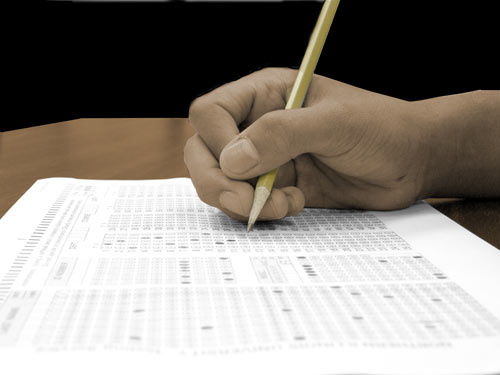
Deeply imbedded in the American psyche lingers the belief that punishment of undesired behavior is the ultimate goal of any test. As a people we have been slow to relinquish this notion.

Our Puritan heritage provides the absurdity of the “swim-test” of witch hunt lore in which those suspected of sorcery were bound in a sack and thrown in a river.  Occasionally, alleged witches overcame their natural buoyancy and sank to the river bottom. The price for vindication on the charge of witchcraft was often death by drowning.

More often, however, the accused simply floated. In such instances it was deemed that the water had “rejected” the evil in the perpetrator’s body. Those who floated were snatched from the water and promptly put to death. Call it the puritan version of a Catch 22 later made famous by Joseph Heller.

Our culture is no stranger to irrational high-stakes testing or poor test design.

Fortunately, our society is somewhat wiser today. We no longer execute those who survive our standardized tests; we merely seek to deprive them of educational resources as a punishment. 

It remains to be seen what fate ultimately awaits those who perform poorly on our state-mandated, standardized assessments. It would appear, though, that  sticks will be many and carrots few. Therein resides the conundrum.

Standardized assessments will never, in and of themselves, improve the academic performance of our students. Does a blood-pressure cup cure high blood pressure? Or, does it merely indicate who might profit from increased medical surveillance?  Would it make any sense to withhold medication that treats high blood pressure from a medical facility where high blood pressure was prevalent?

How then can we threaten to withhold resources from schools where the demonstrated need is greatest?  The very question boggles the mind…

Ignorance and disease share a common trait. By the time we determine that a test is order, it may be too late to change the behaviors that led to the disorder. Many diseases can be conquered only by lifestyle changes years, even decades, prior to the onset of symptoms.  Ignorance holds those characteristics in common.

So, how will we improve the academic achievement of our young people?

One key for improving student performance is standardized working conditions for educators.  How can we expect similar results from vastly dissimilar learning environments?

Teachers in one jurisdiction might have thirty-six students in their classrooms.  Their counterparts across some line on a map might have only twenty-two.  Which group of teachers is most likely to reach a higher percentage of their students?

Teachers in one school count themselves lucky to have one class-set of textbooks to share among several classes.  Teachers in another school send a book home with every child.  Which teachers are more likely to have students prepared for class tomorrow?

Teachers in one elementary school confront 300-plus minutes-a-day of non-stop custodial care for dozens of children.  Teachers in another elementary school have fewer students and are relieved by itinerant “specialty” teachers for enrichment activities like music and foreign language.  Which teachers have more opportunity to plan for dynamic instruction?  Which teachers are better able to hold students accountable?

Do you really believe that children sitting in air-conditioning and children sitting in hazy, hot and humid classrooms are going to perform similarly on any standardized assessment?  Wouldn’t it be interesting to see that statistical correlation?

The clamor increases for “accountability” in our  schools, and teachers are increasingly expected to play the role of Professor Harry Higgins for every  little Eliza Doolittle in the world. Still, we are ignoring one key element of that famous musical. Professor Higgins wagered on his ability to change the life of just one student.

Unfortunately, the reality for teachers more nearly approximates the circumstances of the old woman who lived in a shoe. Teachers have so many students, they just don’t know what to do. Today, however, broth without bread and a whipping before bed are not considered viable educational models, nor are they conducive to increased achievement on a weeks-long marathon of standardized testing.   

Most teachers dream of holding students strictly accountable for the acquisition of skills and knowledge in their classrooms. Most teachers learn early in their careers, however, that the odds are stacked overwhelmingly against fulfilling such ambitious dreams. The obvious remedies are perversely flip-flopped and become road-blocks.

Teachers call for a reasonable number of clients to be served. Staffing ratios are reduced; programs and positions are eliminated; class sizes are increased.

Teachers call for more instructional time. Instead, they lose weeks to new computerized assessments.

Teachers call for fewer disruptions to the school day. Instead, they watch a different 20 percent of their class leave every day for a weeks at a time rendering it nearly impossible to escort a class through a sequential curriculum.

No standardized test will ever, by itself, improve the intellectual prowess of a student. For that, three facets are required: involved parents, a manageable number of clients in each classroom, and qualified teachers equipped with appropriate and adequate resources.  Academic achievement is adversely impacted when any one of these essential elements is missing.  Incomprehensibly, too many students and educators spend entire academic careers lacking all three.

With the force of a moral imperative, it is incumbent on our society to provide adequate and equitable resources to every public school.

Centuries from now, will historians look back on this period of economic elitism and wonder why so many children were willfully left behind?  Centuries from now, will social scientists look back on our testing mania with the same derision that we reserve for the witch hunts? Centuries from now, will educators ridicule this era for assisting only the survivors of our psychometric “swim-tests”?

If we continue to distribute grossly inadequate resources inequitably, if we continue to emphasize back-end assessments instead of front-end instruction, if we continue to formulate policies that abandon those most in need, then folly shall be our legacy.

[This updated Commentary originally appeared as a slightly shorter version in the now defunct Prince George’s County Journal on February 22, 2002. While ESSA has replaced NCLB on the federal level, it may be years before states walk back from the policies put in place to obtain federal funding. ]

When life imitates an apocryphal exclamation…

“Let them eat cake!”

No evidence exists that Marie-Antoinette actually uttered this infamous phrase upon being informed that the peasants had no bread to eat. Even the translation from the French is less than precise, since “…qu’ils mangent de la brioche!” is more accurately rendered by the phrase “Let them eat rolls!”

Still, this anecdote, historically precise or not, has survived for two centuries because it illustrates so cogently the bitterness that arises from an acute division of social classes. It is chillingly representative of the resentment engendered by the insolence of office vis-à-vis the masses. Ultimately, the French aristocracy in the 18th century paid with their lives for ignoring the needs of the many.

Nearly two centuries later a more enlightened John F. Kennedy would say, “A society that does not help the many who are poor will never save the few who are rich.” Unfortunately, our political practices have yet to reach the lofty aeries of our rhetoric.

The youth of today crossed the threshold into a new millennium of immense promise and potential, but the door may soon slam shut on any save the most privileged. The war on our public schools is well-funded and widespread. Generally, and for no good reason, we are failing abysmally to meet the needs of America’s poorest youth.

This society in general, and this community in particular, still decline to commit the necessary resources to the education of all our children. Constituents are screaming for reduced class size and the consequent personalized attention from teachers that their children need and deserve. Instead, staffing ratios in Prince George’s County have fallen in the last decade from 54 teachers per 1,000 students, which was already inadequate, to 46 teachers per 1,000 students which renders nearly impossible the job assigned to teachers and administrators .

This actually sounds like 22 students a class until you do a little number crunching. At any given time, one-quarter to one-fifth of staff members are free of children during their planning period. Further complicate matters with some “non-teaching” or “non-classroom based” positions and pretty soon we’re talking more than thirty students per class and a near inhumane load of clientele for the typical classroom teacher. Nor is eliminating those “non-classroom based” positions the solution, because the work they do helps the school run more efficiently.

What is really accomplished when a perennially overworked staff receives an improvement in compensation only to discover longer class lists at the start of the school year? One colleague even joked that they could have the raise back for smaller classes, but most are just doing what they’ve always done. They are trying to do their best in difficult circumstances.

Another budget cycle looms large and there are no guarantees -as always- that the community will support the Board of Education’s budget request.

In the last three decades, the budget request was fully-funded just once on a fairly low ball request…

Must this continue ad infinitum?

A certain political party encourages us only to consider our narrow self-interest instead of the common welfare of our citizenry.   We are urged to vote for candidates who support vouchers, tax-credits, charters, school choice and home schooling. They would have us believe every family is an island, whole and entire unto itself; and that, as participants in society, we are not diminished, all, by the failure of any child. John Donne must surely be turning in his grave at the hardening of our collective heart.

For that same political party, the one where fewer than 1,000 members contribute in excess of 133 million dollars to the party coffers, the goal, it would appear, is to pit the have-littles against the have-nots in a strategy of divide and conquer. It is most frightening that the strategy may be paying dividends.

Home teaching? Beyond the fundamentals, how many among us can presume to have the qualifications to teach math through infinitesimal calculus, science through physics, a foreign language to fluency, information systems, literature, music and physical education? Keep it as an option for those so inclined, but for those who are unable to execute an instructional plan, writing off the potential of their children is not an option.

School choice? The only reasonable choice is for every child to attend a school that has sufficient staffing and resources to do the job. Anything less constitutes dereliction of our duty to the next generation.

Charters? Well-regulated charters that offer well-defined programs that differ significantly from the traditional schools offer beneficial alternatives. However, the headlines have been weighed down with stories of financial irregularities, profit skimming and refusals to accommodate students that present challenges.

Vouchers? In Florida, potential “voucher” students were reportedly turned away from 9 out of 10 private schools when they applied due to insufficient seats. Private schools do not have the capacity to take up the slack of students who might want access. Anyway, how is removing money from the public coffers the solution for schools that are already drastically under funded?

Be wary, very wary, as you cast your vote! Every election continues to be the most important election in history. For when the masses cry out that their children are floundering in the Public Schools and that there is insufficient educational “bread” to go around, the message that some are hearing is:

Let them attend private school.

The Juggler’s Lament

Once upon a time in the faraway land of Lancelot, there lived a citizenry who, for reasons we may never fully understand, regarded juggling to be among the highest forms of human self-expression.

Conversations around the dinner table were replete with references to the latest feats of renowned jugglers. Some might savor the behind-the-back passes of Jake the Juggler, while others preferred the under-the-leg toss of Jane the Juggler. Old timers might reminisce about the exploits of the great Jim the Juggler who once kept the prodigious quantity of twenty-balls aloft for seven minutes, or even Jocelyn the Juggler who had once juggled eleven hours without a drop.

Juggling was a difficult profession requiring endless practice and selfless devotion to keep the audiences entertained, but many were the parents who pushed their children toward juggling for the simple privilege of one day being able to say, “My child is in the Juggler’s Guild.”

It was a simple and happy time.

So revered were jugglers that the citizens of Lancelot petitioned to have jugglers be regarded as public servants with a salary and a pension.

This is when politicians and bureaucrats became involved. They resolved to get the public its money’s worth. The legislature named a Director of Juggler Assessment and Certification who had lasted less than a year in the trade.

And so it came to pass that people who had never kept so much as two balls aloft at one time were charged with the licensing and certification of jugglers. First, these public servants designed a test. The testers would launch the contents of six buckets filled with three-dozen balls to prospective jugglers standing in rooms with very low ceilings. In each bucket the balls varied dramatically in dimension and weight.

Some were hollow; some were filled with sand; still others were filled with lead. The jugglers were expected to keep all the balls flying through the air in nearly identical arcs.

Some of the balls were quite fragile. The juggler was expected to spot those balls first and keep them from breaking.

Some of the balls had barbs and hooks that could prick painfully. The juggler was expected to manipulate them without injury.

It did not matter that no juggler, past or present, had ever successfully kept so many objects in the air.

Points were mercilessly subtracted for every ball and drop of blood that hit the floor.

It was suddenly very difficult to become a juggler.

Next came the inevitable reports decrying the incompetency of the nation’s jugglers. The president of Lancelot held a seminar to study the juggling crisis. Not one juggler was invited to participate.

When the Juggler’s Guild came forward to suggest that perhaps they were best qualified to establish parameters for accepted practice and entry into their organization, they were told that the task was far too important to be left to a bunch of jugglers.

The Bureau of Licensing and Certification designed a special velcro suit with webbing under the arms and between the fingers that all jugglers were required to wear. Fewer balls hit the ground now, but it did not make for very compelling juggling as most of the time jugglers were forced to chase the better part of three-dozen balls that were rolling around on the floor.

Jugglers had been reduced to a sorrowful state of affairs. It was not long before the crowds dwindled. Those that remained either heckled or mercilessly mocked the jugglers. Taxpayers even began to begrudge jugglers the pittance they earned in salary and pension.

Not long after that, it became difficult to find anyone who wanted the job of juggler, and very rightfully so.

Thank goodness times have changed. Thank goodness our nation is not engaged in the torture and torment of simple entertainers. Thank goodness we no longer perpetrate such crimes on our jugglers.

No, that has become the fate of our teachers…

The statistical problems with sample size

Imagine for a moment that some agency, in an attempt to establish the average Body Mass Index for Americans, used players in the NFL as the original “sample”. After carefully establishing the range and the mean for BMI in the entire league, would it be reasonable to look at the rest of the American population and declare that the human species was shrinking

The absurdity of the proposal is staggering.

However, just such a scenario has been played out for years with the Scholastic Achievement Test when newspapers decry our nation’s “plummeting” SAT scores.

The validity of this standardized test for anything other than determining the socio-economic status of those sitting for the exam might be the topic of a future article. Cost is listed as one of the major impediments to sitting for the exam.

Today, however, alarmist headlines are inexcusable when, for decades, the SAT was normed against and administered to America’s academic elite, the upper quartile of high school students.

We are moving, albeit at a glacially slow pace, toward a society that discourages the concept of disposable children. As we come closer to furnishing all children the opportunity to compete against their peers, we are inexorably increasing the sample size.

Statisticians will confirm that the “average” score will invariably fall as the sample size increases. Except in the case of a totally randomized sample, it is foolish to expect otherwise. The SAT has yet to be normed on a random sample across the spectrum of all American students.

Yet, such realities do not hinder ideologues from using such erroneous data analysis as political fodder to question the effectiveness of our public schools.

Diane Ravitch clearly illustrates in Reign of Error how student achievement and academic performance have been steadily improving for decades according to a host of of alternative measures. More students know more about more subjects, and at earlier ages, than ever before in our history.

Moving forward will require that irrelevant soundbites and erroneous headlines not drive the debate around educational egalitarianism.


[This Commentary appeared originally in the now defunct Prince George’s Gazette on 10/23/2014.] 

School investment must keep pace with education needs

Overland transportation needs were satisfied for centuries by horse-drawn vehicles. Dirt roads were entirely adequate thoroughfares when dealing with such limited speed. The invention of the automobile, however, changed things. With increased speed arrives the need for smoother, more durable surfaces. Societies have responded by dedicating resources to construct a network of paved roads, highways and interstates on which commerce and tourism flourish. Public monies were invested wisely in a transportation infrastructure to enhance the common good. The dividends of this investment have been distributed as broad access to goods and services on a scale that would have defied the imagination of our ancestors.

So, in this the age of the information superhighway, why do our schools still operate on a model that basically predates paved roads? For all those concerned about the intellectual development of children, this situation should be alarming.

Unfortunately, our system of delivering was never designed to furnish optimal results for all children. At the beginning of the industrial age, a 25 percent dropout rate was the norm and only elite students continued studies after high school. A century ago, marginal literacy and numeracy were the largely achievable goals of public education for citizens. However, the number of skills and the amount of knowledge needed to compete in today’s world is expanding at an exponential rate as the compendium of human knowledge continues to double every seven years

Moreover, in recent years, we have elevated the expectation of optimal academic results to include every child with no significant changes in the school day, the school year or the scholastic career.

Our protocols for delivering instruction are dated and in need of modernization. Our calendar is agrarian, and our school day is modeled after a post-industrial-age assembly line that offers little in the way of meeting the needs of every individual learner, unless, of course, the teacher devotes every waking hour to planning instruction and furnishing meaningful feedback on student work. It must be duly noted that any relationship between Management and Labor that remains totally dependent upon the altruism of the work force will fail, in the long run, to meet its objectives.

Ironically, even the captains of the auto industry learned that empowering workers to control the speed of the assembly line reduced mistakes and improved the product, however, the assembly line for teachers continues to accelerate. The typical highly effective teacher dedicates nearly 60 hours weekly to improving the lives of children. Far too much of that workweek is spent on tasks that have little to do with what should be a teacher’s primary function: the preparation and organization of effective instruction.

School funding as a percentage of the gross national product has remained virtually unchanged in this nation since World War II, hovering around 6.3 percent of Gross National Product, and our own per-pupil spending remains a fraction of those jurisdictions with whom we compete for highly qualified instructors. Prince George’s County’s contribution to the school budget has dropped to 39% percent of the Board of Education budget from 49 percent a couple decades ago. Disparities in funding between affluent and economically challenged communities perpetuate both the divide in academic performance and the stratification of our society. While we have attempted to maintain competitive salaries in Prince George’s County, we have done so at the expense of a reasonable staffing ratio.

Our community can and must improve its support for the public schools. We must invest in our schools with the same goal fulfilled by our investment in highways: to meet the needs of the times. We simply must smooth the way for all children as active participants in the age of information. The yields will be immeasurable, but real. The only real question is whether we are ready to make the investment of paving over the cart path that leads to social justice for children.

Further Reading @ The Prince George’s Sentinel

[This Commentary first appeared in the Prince George’s Gazette on January 12, 2012]


What will be the Prince George’s County legacy to public education?

“If a nation expects to be ignorant and free, in a state of civilization, it expects what never was and never will be.”
Thomas Jefferson to Charles Yancey, 1816

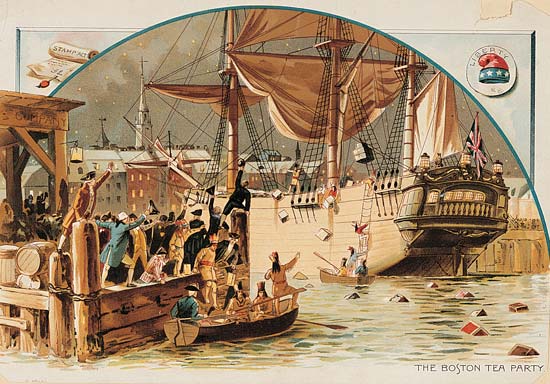
A couple centuries ago, this nation’s independence was predicated on the rebellious notion of “No Taxation without Representation”. The fundamental belief in the consent of the governed inspired the original “Tea Party” and, as a result, we live today in a successful, if deeply divided, representative democracy.

In recent years, however, elements of the extreme right have conspired to truncate that original revolutionary catch phrase to a simple “No Taxation.” Search all you want, but nothing in the Constitution guarantees that the right to amass wealth shall supersede all other rights or that the right to profit shall never be infringed.

Still, one conservative ideologue advocates for a government that can be drowned in a bathtub, while still another seeks to bestow “personhood” on corporations while advocating for the reversal of the hard-won rights of organized labor. It is one thing to discuss reasonable constraints on the intrusion of government on private lives and quite another to suggest government is incapable of providing for the common good.

We yield to such demagoguery at our own peril.

Our elected leaders are charged with a half-dozen tasks in the preamble of our Constitution. A Social Contract is in peril when one party to the contract declines all reasonable compromise and proves itself unwilling to enter into the debate with anyone perceived as opposition.

Our union will be more perfect when all citizens are better informed.  We will establish justice when every child is able to access a high-quality education. We will ensure domestic tranquility when the fruits of skills and knowledge replace the catch-as-catch-can of the ill-prepared. How can we ever hope to promote the general welfare without leveling the playing field at the schoolhouse?

Such accomplishments depend on communal goodwill and sacrifice. They are common interests and all of them have associated costs. One would be hard-pressed to name a more important endeavor for the maturation of our democracy than the maintenance of a firm commitment to Public Education.

Our priorities at all levels of government – federal, state and local – must endure harsher scrutiny. Do we want government that serves corporate interests or one that serves the people? Our founding documents are pretty clear on that issue as well.

This nation spends more on the “common defense” than the next six industrialized nations combined, while too many American children sit in overcrowded classrooms studying outdated materials in dilapidated physical plants. We purchase more than enough arms to deal with our external threats, but how will we secure the blessings of liberty to ourselves and our posterity if we permit ourselves to decay from within?


[A shorter version of this Commentary first appeared in the Prince George’s Gazette on June 14, 2012.]


Giving Children the Gift of Education Equity

The season of hope, good will and charity is upon us once more. What better time to ask ourselves the important question about what we owe to our fellow travelers in this great human adventure? Our society remains deeply, perhaps hopelessly, divided on the issue.

Back in May 2014, in a quote worthy of Ebenezer Scrooge, a commentator on Fox News, Todd Willemon, offered his take on the discussion during an interview on the “The Daily Show”. What insights did he offer on the 40 million Americans in need of health care insurance? “If you are poor, stop being poor!”

Willemon offers, in earnest, a counterpoint to what Representative Alan Grayson (D – FL) had previously offered, in jest, about conservative plans for health care, when he said, “Don’t get sick; if you get sick, die quickly.”

How is it that the affluent harbor such contempt for the impoverished? Tens of millions of the working poor toil at multiple jobs for subsistence pay. What person would choose such a life if any alternative were available?

Families do not choose endless labor for inadequate wages and benefits; that reality is inflicted upon them by an investor class that values personal profit over the welfare of employees.

Sixteen million children – more than one-in-five, nationally – did not choose to be born to poverty; intergenerational poverty has been the status quo in this nation for centuries.

More than half a century ago, Bishop Fulton Sheen bemoaned our national obsession with the unbridled acquisition of what he called “superfluous wealth”, or wealth that serves no purpose but the generation of ever more wealth.

Sixty years later, the richest nation on Earth provides the fewest supports to the children in most need. We pay lip-service to the idea that “children are our future”; however, our schools are inexorably drifting back to the status of “separate and unequal” effectively removing the most stable ladder to escape the hole of poverty.

So, in this season of charity can we agree, please, that achieving equity in the schoolhouse is not just for your child, but a moral imperative for all children, right here, right now?


[Originally appeared in the now defunct Prince George’s Gazette on 12/18/2014.]


Education lessons from merry olde England

Tis the season we explore the redemptive powers of charity, generosity and empathy. In the coming weeks, millions of households will stuff their bellies full and head for warm family rooms to watch their favorite version of that most frequently adapted classic by Charles Dickens: “A Christmas Carol”.

Granted, this nation has progressed far since that little tome was printed, at Dickens’ own expense, and distributed across England at a meager five shillings per copy. Today, only one in five children suffer the ravages of homelessness, food insecurity and wretched poverty. That is down from the seven-in-ten figure that inspired the creation of everyone’s favorite miserly curmudgeon, Ebenezer Scrooge.

Collectively, we treat children less like chattel, now. Children are less frequently considered a cheap and expendable labor force in modern times. Fewer children are maimed in factories than in the past. We have passed child labor laws and, for the most part, no longer treat children as part of “the surplus population” that Dickensian England was, by all accounts, attempting to reduce by attrition.

This society has become more adept, at least provisionally, at ensuring the common necessaries are available to most of our citizens. Most children do not experience abject need for food and shelter. Compulsory attendance  at school is an invention of the 20th century. For too many children, still, that school lunch may be the best meal of the day. 

Still, it is alarming than any children at all are forced to endure societal indifference to their situation.

Outperforming 19th century England constitutes damning by faint praise.

Dickens used his personal wealth to fund schools and improve access to education for underprivileged children. He saw education as an exit strategy from the servitude of the workhouse. When it comes to our budget priorities this year, we would all be well served to heed the warning of the second Spirit, “This boy is Ignorance and this girl is Want. Beware them both…but, most of all, beware this boy for on his brow I see that written which is Doom, unless the writing be erased.”


[First appeared in the now defunct Prince George’s Gazette, 12/12/2013]

Equal Opportunity: A Grim Fairytale of Two Cities

Once upon a time in a land far away, a snafu of biblical proportions separated a set of identical twins in the regional hospital and sent them home with two sets of parents.  Both sets of unsuspecting parents would love their children unabashedly and without reservation. Both families were determined to do the best possible job raising their little bundles of joy.

The two lads possessed nearly identical aptitudes: prodigious intelligence and incredible potential at birth.  The first, Monty,  would live in the lap of luxury; the second, George, would know only hardships.  Monty, whose father was a highly successful investment banker, would know only privilege; George, whose father repaired small engines for a living, would discover life’s obstacles.  Monty’s parents had means; George’s parents belonged to that class of people called the working poor. They were good, honest, hard-working people, all, but at opposite ends of the economic ladder.

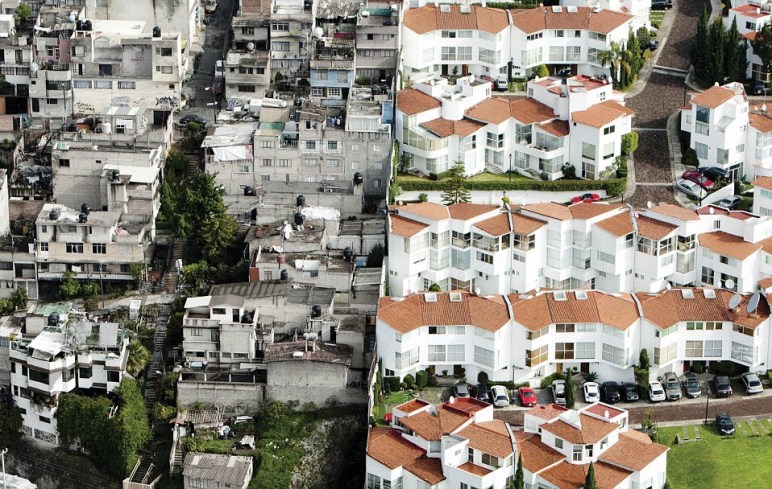
Monty went to live in a single family home in the suburbs with a crime rate next to zero; George went to the complexes.

Monty was doted upon by his mother and his nanny who encouraged every flight of fancy.  George watched hours of soap operas with the unlicensed daycare provider while his mother worked to make ends meet.

At age three, Monty started studying violin according to the Suzuki method with a replica of a Stradivarius; George listened to the radio, expressed an interest in music, but there was no room for an instrument and lessons in the household budget.

Monty was indulged with a computer, books and a plethora of educational toys; George’s parents managed to meet his basic human needs of food, shelter and clothing.

Little Monty’s stay-at-home mom read to him every night until he went to sleep; George’s mom would fall asleep by the second page weary from her constant labor.

Monty learned to read in a posh pre-school program while George waited still another year for a chance at kindergarten.

Monty and his father camped, hiked and sailed together on the weekend; George’s father worked a second job at the local gas station.

Monty eventually attended an elementary school with class sizes between fifteen and twenty-one; George’s classes were sometimes double that.  Monty’s teachers were highly-qualified and adequately compensated; George’s teachers were underpaid and inexperienced because a voter imposed tax-cap hindered appropriate funding of the schools.  Monty walked to the local school a few hundred yards from his home; George rode a bus for an hour to avoid the largely unsuccessful local school.

Every time Monty sneezed, he was off to see the doctor.  George’s parents had no healthcare coverage, so visits to the doctor were prohibitively expensive.   Monty seldom missed school; George was absent more.

The multi-purpose room at Monty’s school could not hold all the parents on Back-to-School night; the one at George’s school was sparsely populated because most parents were still at work.   The PTA at Monty’s school held fundraisers for all the little extras; George’s school suffered shortages of even the most basic supplies.

The parents in Monty’s school district financed political campaigns; the parents in George’s school district wrote letters.  Monty’s school district got fifty new certified teachers (among the the finest transferred from George’s school district!); George’s school district got bupkus.

When Monty started having difficulties with math and science, his parents hired a tutor.  When George had these problems, his parents would do their level best to help him with his homework.

Monty had access to a well-stocked school library; George’s school system had to spend that money on gasoline for the school buses.

It was discovered that Monty and George had IQ’s in the genius range.  Monty went off to private school to make acquaintances among the “elite” and to form lifelong friendships and connections.  George was placed in a still over-crowded “Talented And Gifted” class where perhaps a third of the students were misplaced.

By a bizarre quirk of fate, both Monty and George lost their fathers to heart attacks at the tender age of fifteen.  Monty and his mom received a huge trust and the proceeds of a sizable insurance policy.  George and his mom received, shall we say, a somewhat lesser check from Social Security.   

A year later their mothers were both rendered invalids by a stress related stroke.  Monty and George and their two siblings were sent to live with relatives.

Here we part ways with our young heroes and leave them to their devices.

Now, reader, which one, George or Monty, was more likely to get into a good college and excel there?

Some will argue that there are people like Monty who fail, and that, conversely, there are people like George who succeed beyond all expectations.  That is undoubtedly true.  However, this truth is best described as anecdotal.  It is called a statistical anomaly.  From time to time, an individual will surprise us with the unexpected for both good and ill.

What happens if we compare the statistics on 60,000 people like Monty and another 60,000 like George?  Which group do you think would have the higher SAT average?   Which group would put the most students in post-secondary education scenarios?  Which group would generate the most dropouts?  Which group would put the highest number in a correctional facility?  This is not rocket science.

There are those among us who decry educational spending as a sinkhole.  Some will say: “Throwing money at the problem will not resolve our educational woes!”  Some will tell us that family values, not money, will save our children.  Nonetheless, throwing money most assuredly seems to work, more often than not, for those who have the disposable income to dedicate to their children’s education.  Money is a medium of exchange; it supplies people with opportunities that those without it will never know.

Will more money resolve every difficulty in our public schools?  It certainly will not.

But a sane, rational and egalitarian society must use every means at its disposal to prepare all children to compete in an ever more complex and demanding world, even (especially?) the children of the poor. A life among the socio-economically disadvantaged presents fewer opportunities.  If the playing field of life is ever to be leveled, it may even be necessary to allocate more dollars, not fewer, in schools where poverty is prevalent. In the end this is a self-serving act, because we do not know what someone like George may contribute if furnished with circumstances favorable to personal growth.  The child you act now to save may one day save you.

In Frank Capra’s “It’s a Wonderful Life”, George Bailey tells Mr. Potter that the poor do most of the working, and living, and dying in Bedford Falls, and that it should not be too much for them to expect a couple decent rooms and running water.  Permit me to suggest that the amenity of a great school be added to that list, one staffed by competent and committed professionals armed with adequate resources. Ultimately, this society will be judged on how it responds to this challenge. Will we tighten our belts and make the necessary sacrifices for the good of all our children, or will the rich continue to get richer, and the poor…

Well, you know the rest.  But, please, do not try to claim that money, or the lack thereof, is irrelevant to educational opportunity and/or performance.

[This is a slightly re-worked update from a commentary in 2000 originally published in the now defunct Prince George’s Journal.]