Is equity “too expensive” for the children of Prince George’s?

     In his book Savage Inequalities Jonathan Kozol pointed out that a Maryland task force on school funding suggested to the governor in 1983 that “100 percent equality was too expensive” a proposition, and that, therefore “the poorest districts should be granted no less than three quarters of the funds at the disposal of the average district.” Decades after the Supreme Court had ruled that “separate” is inherently “unequal” and moved forward -however slowly –  with desegregation, Maryland enacted a policy that suggested “unequal” education was just fine for the socio-economically disadvantaged. 

     More than three decades later, and a decade following the passage of the landmark Bridge to Excellence Act,  based on the renowned work of the Thornton Commission chaired by Dr. Alvin Thornton, the children of Prince George’s are still experiencing the legacy of that Orwellian public policy. Just last year Worcester County budgeted approximately $17,093 per student while Prince George’s County has budgeted about $14,813. Thornton funding has closed the gap somewhat, but equity has yet to be achieved for children living below the poverty line. [See link: 2015 Per pupil Spending in Maryland ] 

     Nationally this year 91% of school funding, approximately $550 billion dollars, will be allocated locally for schools, mostly derived from real estate taxes. The current funding stream virtually guarantees that the quality of education will be determined by the average net worth of homes in a zip code. 

     Should Prince Georgian’s be heartened by the fact that our per-pupil spending has closed the gap to 86 percent of our more wealthy neighbors? Or do we owe it to our children to improve still further and, in so doing, offer ALL the children of this community the surest path to breaking the chain of poverty? Or will we allow those who have maximized their opportunities to pull the ladder up behind them? The answer to each question should be abundantly clear.

      Today, two words should strike terror into the heart of every Prince Georgian with a child in school. Two words should inspire every supporter of public education in Prince George’s County to political action. These same two words need to be excised from our political lexicon and our regional rites of spring. What are these two words?

-Budget Reconciliation.

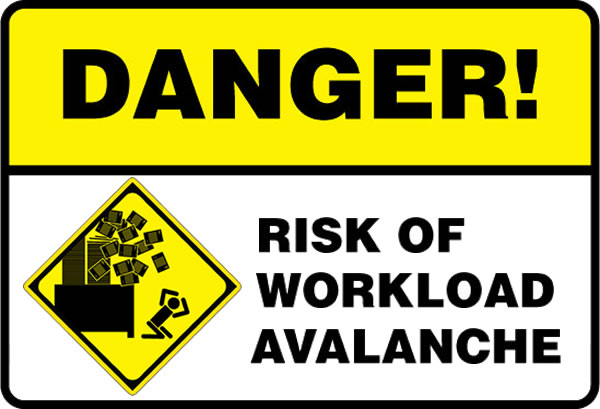
     Our superintendent will likely soon be compelled to do what all effective educators always attempt when the allocations do not match the budget request: make do. As much needed line-items are deleted by the doctrine of cost-avoidance made famous by a previous superintendent, the Superintendent/CEO must deploy inadequate resources for maximum effect.  What an onerous, unenviable task to befall someone who has devoted a lifetime to children.

Whose dreams does one elect to quash? Whose aspirations get trampled? 

  • Is it the students on the cusp of possible success who watch beneficial programs of study disappear?
  • Is it the teachers who dream of reaching each-and-every student that will find themselves hopelessly overwhelmed by unreasonable class sizes?
  • Is it the administrators who will witness the dismantling of effective learning environments as necessary resources are withheld?

None of these alternatives should be acceptable outcomes for our children, or the children of our neighbors.

     Still, these are among the options that we face if this community does not unite behind the Board of Education and Superintendent in the struggle to furnish adequate resources to the children of our neighbors. Everyone who cares about education in this county needs to engage in the political fray that threatens the well-being of children.

     We must not misdirect our efforts!

    Our struggle lies with the funding authority of the Prince George’s County Public Schools and an electorate that has permitted inequities to flourish for as long as any of us can remember. Struggle we must, however, lest we be counted among those that Frederick Douglass chastised for expecting food without plowing the ground. Otherwise, what fate awaits us with the next, inevitable economic downturn?

     Unlike in previous budget cycles, the County Executive, Rushern Baker, and members of the County Council are spreading the word that commitment to public education signals to businesses contemplating a relocation that Prince George’s County is a healthy and vibrant community. If we want the stability of families choosing to make a life in Prince George’s County, potential newcomers need to see a community commitment to the public schools.  It is incumbent on Main Street to make doing otherwise a politically untenable position.

     In the long term our elected leadership needs to establish policies and procedures that will effect full-funding for the public schools at levels that will meet the educational needs of all children at optimal levels. Our leadership must continue to demonstrate to the naysayers who resist such ideas why these policies are in the best interest of the common welfare.

     Long ago this great nation recognized the error of its ways and abolished the practice of fractional apportionment of votes based on race. Perhaps, the historical moment has arrived for this community to lead the way in abolishing the practice of fractional apportionment of educational opportunities based on socio-economic status. Until such time as this goal is attained, until such time as we furnish every child a truly equal setting at the American banquet, until the entire community embraces the sacred trust of educating the next generation, in the words of Martin Luther King, Jr., “We must not be satisfied.”


[A much updated & revised more current version of a “Viewpoint” that first appeared in the now defunct Prince George’s Journal on June 4, 2001.]




All of Our Fates are Intertwined

What single human behavior remains the greatest threat to achieving social justice in our time? The capacity to endure needless suffering and inequity, without complaint, must surely be a candidate. Another possibility must be endemic political apathy whether arising from abject nihilism or from the belief that misery and misfortune are largely in the rearview mirror.

Even a cursory examination of the last century might lead the casual observer to conclude that humankind’s potential for inhumanity places us all in imminent peril despite our material wealth and standard of living. The compendium of psychopathic megalomaniacs and the toll of their innocent victims might lead one to believe that our comparatively “minor” social injustices, here and now, are hardly worthy of note: Mao Zedong, 45-72 million dead; Adolf Hitler, 25 million dead; Joseph Stalin, 20 million dead; Pol Pot, 1.5 million dead

This is hardly an exhaustive list. Modern despots with death tolls in the hundreds of thousands now approach banality. The acquisition of power is a most volatile solvent to the thin veneer of civilization. So, where do our current inequities in the delivery of education fall on the moral plane when compared to historical rates of human mayhem?

The principal responsibility of education is to remind each generation that our own national aspirations and lofty rhetoric are replete with irreconcilable contradictions in the execution of this great American experiment.

“We hold these truths to be self-evident that all men are created equal…” Ask yourself how that worked out for the 500 nations of indigenous peoples that inhabited this continent prior to our arrival, or the twenty generations of Africans sold into bondage, or our countrymen imprisoned in the internment camps for Japanese descendants during World War II. The Equal Rights Amendment remains on hold since the eighties when women are the majority of our population. The evidence suggests that, in practice, some are more equal than others… 

The road to each of these transgressions originates, to some degree, in the dehumanization of the “other” and terminates at the preservation of social advantage for the “dominant” cultural force. Those that own the gold write the rules, or so the saying goes. The vestigial remnants of systematic oppression remain readily apparent in the workings of the criminal justice system and the grossly uneven efforts to promote the general welfare of the citizenry.

Devoting the resources necessary to maximize the potential of every child constitutes a moral imperative for every community. Our evolution to the status of a truly egalitarian democracy is irrevocably dependent upon the unyielding political engagement of conspicuously well-informed citizenry intent on never revisiting the errors of our heritage.

It is unconscionable to permit a “present” that is merely “survivable” to become the enemy of a future that is “optimal” for all children. 


[The original version of this “Commentary” appeared in the now defunct Prince George’s Gazette on February 19, 2015.]

Don’t move the start of school year until after Labor Day

Two reasons stand out.

First, during the Agrarian Age — pre-dating the Industrial Age of late 19th and 20th fame — farmers really did need children to help tend the crops on the family farm during the summer. Even cursory genealogical research reveals the premium that previous generations placed on large families.  Second, human beings have proven curiously resistant to changing long-practiced, traditional behaviors.

Our current agrarian school calendar was never predicated on the assumption of optimal academic achievement for students. Even the goal of functional literacy for all is a fairly recent phenomenon. At the dawn of the Age of Information, one can only hope that decisions about our school calendar will be grounded firmly on the concept of learning outcomes rather than the economic considerations of private enterprise.

Here in Prince George’s County, the education community has been coping with the rigors of the externally imposed testing regimen, driven by the top-down initiatives of NCLB and RTTT, in part, by opening schools prior to Labor Day. The extra days of instruction have yielded dividends in improved performance on the federally mandated statewide assessments that arrive unmercifully in March.

It was a local strategy that has borne fruit. Some percentage of our increase in test scores can be directly attributed to the extra instructional time before March “Testing” Madness begins. Increasing the time devoted to academic endeavors prior to the administration of the testing regimen has served to keep this school system competitive with more affluent surrounding jurisdictions.

Most educators concluded long ago that standardized assessments are (how can this be phrased kindly?) less-than-ideal measures of student growth. However, as long as so much rides on those results, the education community must be free, locally, to implement any calendar that prevents the loss of resources for the schools and protects the interests of children.

Most young people need to be developing 21st century skills, and that will not occur in the service industry summer jobs. Compelling all schools systems to move opening until after Labor Day is terrible public policy for many reasons, not the least of which is once again reducing the role of children to that of chattel for the labor mills while telling them how much fun they are entitled to have.

Schooling Needs to Begin Early in Life

In his new book Our Kids: The American Dream in Crisis, Robert D. Putnam asserts that the social mobility afforded to previous generations is at risk in the current political and fiscal climate. Early on he proclaims the subject of his book to be the “widening of the class-based opportunity gap for young people.”

In the brave new world of communication by soundbite, we witness talking heads that suggest that the poor should simply stop being poor while the political elite expend tremendous energy in keeping the Minimum Wage at decades-old levels. When discussing education, the media frequently portray statistical anomalies as the norm and demagoguery inevitably ensues. “Laziness“, however, is not the primary mover on the issue of poverty.

Poverty tends to be intergenerational. According to Putnam, upward mobility is proving ever more difficult to achieve as society has drastically increased the goals for public education and student achievement without providing the resources to achieve those goals. We are confronting economic segregation of our society into enclaves of the wealthy, neighborhoods of the poor and an ever declining middle class. 

For the sake of clarity

  • Newborns do not choose to be born to poverty.
  • Infants do not choose under-stimulation as a lifestyle.
  • Toddlers do not choose unlicensed daycare or parents toiling for too many hours at minimum wage.
  • Children do not choose to arrive in school already lagging in literacy and numeracy.
  • Students do not choose to attend overcrowded, inadequately-resourced and under-staffed schools.

Poverty and societal indifference to its hardships inflict these circumstances on the most vulnerable among us and too many of the affluent among us fail to recognize their needs. Politically, it is far easier to blame, shame and cast aspersions on the character of the destitute who live among us.

Nationally, one-in-five children live in poverty. In Prince George’s fully two-thirds of the children live at, or significantly below, the demarcation for poverty. Our incremental improvements in scholastic achievement of the last decade need to be taken to scale, and expansion of early childhood education is a moral imperative if our goal remains optimal outcomes for every child.

So, when it comes to support for full funding of the Board of Education budget proposal, remember the words of former NEA President Reg Weaver, “Education reform without resources is just rhetoric.” Not one more cohort of children should be denied adequate and equitable school facilities.


[The original version of this Commentary appeared in the now defunct Prince George’s Gazette on April 2, 2015. It has been expanded for this blog. Image from tutorialstorage.com ] 

A Teacher’s Bowl Runneth Over

Some years ago, a brilliant television advertisement for a well-known breakfast food featured two older siblings – both dubious about their mother’s choice of cereal – attempting to foist her latest selection upon their little brother saying “Give it to Mikey! He’ll eat anything!”

While the advertisement was clever and memorable as a marketing ploy, the strategy seems to have been adopted nationwide in formulating job descriptions for educators.

For all professional educators, the phrase “other duties as assigned” has evolved into the bane of their professional lives. No task is too intrusive on the contractual day, too mind-numbingly menial, or too irrelevant to instructional priorities, to prevent its inclusion on the long list of mandatory duties that have nothing to do with improving the cognition of students.

Give to the teachers; they’ll do anything.

The acquisition of a teaching credential does not require a three-credit course in “bus counting” prior to certification. Yet, each morning and afternoon, a teacher is likely to be found in front of the school building, clipboard in hand, charting the arrival of those yellow behemoths. 

Nothing in teacher formation programs prepares teachers for their future in lunchroom crowd-control or supervision of the hallways. Ninety minutes of delivering instruction for a large class and, without a break, supervise the 300 youngsters in the hall. 

At least those duties do not directly interfere with instructional time.

However, for eight weeks during the school year, the added task of proctoring standardized tests (Benchmarks, PSAT’s, HSA’s, PARCC, etc.) curtails the ability of teachers to deliver coherent instruction.

For those not directly involved in proctoring, the challenge becomes keeping entire classes “on standard” when a different 30-40% of the class is pulled out for testing for 45 days during the year. Teach an elective where multiple grade levels attend each class and it becomes impossible to “advance the class” as a unit through the curriculum for multiple weeks at a time. 

PROCTORING EXAMS IS NOT TEACHING!

Furthermore, teachers spend weeks reteaching concepts to children returning from the testing hiatus. No matter how you cut it, the current protocols for standardized testing disrupt instructional programs for everyone despite the errant claims otherwise by bureaucrats. 

The workday for teachers should be mostly, dare one suggest “entirely”, devoted to diagnosing the needs of students, organizing lessons, delivering instruction and evaluating formative assessments. The inevitable collision with “other duties” too frequently results in a profound misuse of teacher expertise and, hence, the taxpayers’ dollars.

We can ill afford to fill the teacher’s contractual day with extraneous, non-instructional tasks while pushing to the periphery all the essential tasks required to improve academic outcomes.


[The original version of this  Commentary appeared originally in the now defunct Prince George’s Gazette on November 20, 2014. It has been revised for readability. ] 

Improving instruction? Time, not theory.

How will educators most efficiently improve instructional practices in the modern classroom in the years to come?

No question is more important to the academic success of children who attend the public schools. Strangely enough, we might take our lead from the world of sports.

Shortly after Tiger Woods won the Masters’ Championship in the Spring of 2001, a reporter asked his swing coach, Butch Harmon, what it was like to teach the best golfer in the world. Harmon replied, “It is not a matter of my ‘teaching’ Tiger anything; he is just too knowledgeable about his swing. Mostly Tiger tells me what he is working on and I just act as his eyes while he swings the club.”

Kindly note that nowhere does Mr. Harmon mention endless lectures on golf theory that Tiger probably committed to memory long ago.

No. That scenario is reserved for our educators.

Attend almost any school-based, in-service training session and one might not believe that the room is mostly filled with knowledgeable and experienced practitioners of the teaching craft. What passes for “teacher training” is almost invariably one-size-fits-all, mind-numbing presentations sprinkled with the latest jargon for recently re-discovered instructional protocols with which the majority of the participants are already familiar.

When it comes to staff development, management consistently confuses presentation of theoretical principles with guidance toward more proficient pedagogical practice largely because that is all that can be accomplished in a quarterly “drive-by” session of professional development.

So, experienced and successful teachers rail at the fates when compelled to listen for the umpteenth time to a few hours of educationalese first heard untold years ago. Many teachers perceive these exercises as a massive waste of professional time when in their classrooms sit 100 papers to correct, an assessment to prepare, tomorrow’s lessons to be refreshed, data to be entered, calls home to be made, piles of folders to be filed, a Web site to be updated, copies to be made and a couple referrals to be written to guidance and the administration.

Yes, certain foundational knowledge in pedagogy is an absolute necessity for all teachers, especially those just entering the profession.

However, it can also be vigorously argued that, to date, countless hours of seat time in college courses devoted to educational theory have failed to deliver adequate numbers of proficient instructors prepared for the travails of the modern classroom.

So, what makes us think that attempting to cram entire three-credit classes into three-hour presentations every other month, or so, will drastically improve the performance of classroom instructors? When fortunate enough to encourage attempts at implementation, the first attempts range between rough around the edges to abject crash & burns. Without follow-up and coaching, a promising new protocol is frequently abandoned out of frustration. Professional Development as an isolated event does little more than frustrate and annoy presenters and spectators alike. That heartfelt observation comes from a professional educator that has spent time on both sides of the podium.

So, what will dramatically improve instructional practice across the board? Allowing teachers to spend less of the schools day in front of students and more time in the classrooms of more experienced colleagues delivering instruction. Telling teachers how to teach is far less effective than demonstrating effective practices.

New teachers too often find themselves isolated and floundering in a classroom with who-knows-how-many-children for approaching 300 minutes each day. Call it what you will: “sink or swim” or “trial and error”.  At the very least, newcomers to the profession need time set aside to observe successful teachers in the act  of teaching to see the subtle tricks of the trade in practice. They also need to be frequently observed by other teachers who can provide prompt – and appropriate – feedback without the interference of what can sometimes be an “adversarial” relationship with a supervisor.

Experienced teachers would likewise profit from regular opportunities to observe their colleagues. It is impossible to know where a new insight or practice will be discovered and later applied. Decades ago, a certain foreign language teacher observed a renowned math teacher and adapted several of the observed techniques for use in the foreign language classroom. That math teacher later expressed wonder that “math” ideas could transfer into another discipline. Teachers will imitate effective instructional practice once they see it implemented effectively. 

Moreover, systematic observation should not be limited to new teachers and a few mentors. All teachers would profit from frequent collegial observations. First, teachers are far more likely to try a new technique when they have directly witnessed its successful implementation. Second, it is just human nature to put on a bit more of a show for spectators. Third, just as Tiger might have asked Butch if he is turning his wrists over too early on the downswing, one colleague might ask another colleague to look for certain behaviors and solicit advice on overcoming challenges.

Welcome to my pipe dream.

Instituting such a program would require a staffing ratio that would furnish adequate time for teachers to expand their pedagogical repertoire in a school system that has yet to furnish sufficient time for corrections and planning.

You may wonder why systematic observation of colleagues is so important….

If your child had serious legal difficulties would you seek out legal counsel that had never spent a day in the second chair observing other, more experienced attorneys navigating the intricacies of the courtroom?

If your child needed a complex medical procedure would you seek out a surgeon who had only listened to descriptions of the the medical protocol to be employed, or one who had observed and assisted more experienced colleagues with that procedure countless times?

Would you question the cost?

Does it sound reasonable that a teacher candidate can graduate from college one day, enter the classroom as a teacher on the morrow, assume total responsibility for the intellectual development of a room full of children and seldom, if ever, have opportunities to observe experienced and successful teachers?

It is only reasonable if your children are not accompanying their teacher on the long, solitary journey along the serendipitous path of trial and error.


Further Reading: Gates Foundation: Impatient Optimists


[The original “Viewpoint” appeared in the now defunct Prince George’s Journal in September/October 2001. It has been revised. ]

Nurturing in Infancy Prepares Toddlers for Success

What if the attributes of personality most responsible for academic initiative develop between birth and the age of two years? What if the confidence, courage and curiosity of children are the direct outcome of parental nurturing during the first two years of life? The implications for educators would be enormous.

In his book Why Children Succeed author Paul Tough presents a number of findings that seem to suggest that children become intrepid toddlers in direct proportion to the frequency and intensity of parental nurturing in the two years immediately following birth. Children who want for attentive nurturing during infancy, conversely, tend to be more fearful and unsure of themselves.

The former are more inclined to persevere when challenged; the latter more inclined to surrender when faced with adversity. The former seek to explore; the latter tend toward tentativeness.

For early childhood educators, compensating for this reality represents one more high hurdle to clear in meeting the needs of every child. As someone quite eloquently posted on Facebook recently, “We must cope with Maslow’s hierarchy of needs before we can hope to address Bloom’s taxonomy of learning.”

Initiating  children into age-appropriate educational settings at an earlier age is a categorical imperative if remediation falls, as of course it will, to classroom educators. Determining what interventions will ensure that all children begin schooling on an level playing field will be no small task. For too long we have been worried that schools are leaving children behind when in reality too many children arrive at school wearing the intellectual shackles of their socio-economic circumstance.

We must attempt to eradicate the erroneous concept – still held as certain, by some – that not much is happening in the mind of an infant. We now know that infants are actively engaged in figuring out their place in the world almost from the moment they are born, if not before. Rudiments of the ambient language appear in the babbling of infants at three months of age provided that speech samples and face time are ample.

Infants develop confidence in direct proportion to their perceived importance to the adult caregivers in their lives. Near-constant mental stimulation from birth to two years lays the foundation for the habits of mind to follow; training and encouragement furnish confidence and willingness to fail and overcome challenges. These traits are essential to future academic success, and they likely emerge at much earlier stages of development than previously believed.

Perhaps it is time for a series of public service announcements targeting young parents regarding the importance of active parenting for brain stimulation in those first critical years. Surely, the medical, religious and education communities could put together adult education programs that teach the foundational nurturing behaviors that infants require to travel the road to self actualization.

Some might interpret this as an intrusion into the private lives of parents. Still, the founder of the Children’s Defense League, Marion Wright Edelman, asserts that “… protecting today’s children, tomorrow’s Mandela or Mother Theresa, is the moral and common sense litmus test of our humanity…”

Further Reading:

[The original commentary appeared in the now defunct Prince George’s Gazette on 10/28/2014. It has been slightly revised.]

Expectations of heroic proportions are killing the teaching profession

In most instances, heroism should be reflected by isolated events and not the requirements of a job description.

Most acts of heroism occur in extraordinary circumstances when an individual overcomes normal fears and acts, usually involving considerable risk to self, to extract another soul from imminent peril.

Jumping into frigid waters to save someone from drowning, pulling someone from a vehicle fully engulfed in flames, falling on a grenade to save the rest of the unit from certain extinction, these are all most certainly heroic acts. In recent years, too many teachers have furnished that “last full measure of devotion” while saving children from demented gunmen or crumbling walls during a tornado. Each of these isolated instances reflects human pathos, not “other duties as assigned“.

Herein resides the dilemma for educators in the Age of Accountability. The only path to excellence and professional acclaim is tied, apparently irrevocably, to what has become known as the “Heroic Model” which demands total devotion of self to the profession. Selflessness has become the standard for assessing teacher effectiveness, and anything less has nearly become cause for disciplinary action. The altruism reflected in the résumés of most Teachers of the Year usually represents an unsustainable comittment across the span of a career.

Almost invariably, educators enter the profession expressing the idealistic ambition of influencing, in a positive way, the lives of children. The community’s failure to furnish sufficient human and material resources has, however, a deadly  effect on those generous tendencies. Entry level educators saddled by student loan debt, and at a time when they should be devoting all their efforts to the perfection of their craft and addressing the needs of children, find themselves instead taking on a second job out of dire necessity.

Disillusion sets in quickly, and that can be measured by the nearly six out of 10 that decline to endure a sixth year in the classroom.

When a relatively inexperienced teacher recently complained to a colleague about feeling burned out, a colleague replied, “You haven’t been around long enough to be burned out, dear, you are just tired.” Perception, however, is often reality.

To the degree that the effort required to teach effectively is associated with feelings of exhaustion and despair, the children of any community will be disadvantaged. Demanding decades of heroic, superhuman effort, and adding ever more responsibilities to the job description for educators,  are no longer sustainable practices for the public schools.

Further Reading: Those Weren’t the Days, My Friend

[This is an expanded version of a  Commentary that originally appeared in the Prince George’s Gazette on October 24, 2013.]

Educating Youth as Survival Skill; or, the Needs of the Species

Perhaps erroneously, Albert Einstein is credited with the quote, “Two things are infinite, the universe and human stupidity, and I am not yet completely sure about the universe.” It could be argued that institutionalized “ignorance“, not inherited “stupidity“, ranks as one of our greatest failings as a species. The former can be remediated; the latter is more problematic.

At times, the collective folly of our unintended consequences stretches the limits of credulity. Society must accept the challenge of forging intellects capable of well-reasoned deliberation on topics such as antibiotic resistant disease, planetary deforestation and the loss of bio-diversity. Humankind seems reluctant to dwell on the most salient imperative of our collective hierarchy of needs: survival. We are largely powerless to guarantee our individual survival even to reach our theoretical “expiration date”, but we can contribute to the needs of the species by reducing the risk of extermination for our progeny.

Otherwise, homo sapiens risks earning the distinction of becoming the first species to self-annihilate. It matters little to the dead whether Armageddon is accomplished knowingly or unwittingly. The tragedy is that the human race still devotes so much effort to self-destruction and so little to surviving the threats posed by nature, not the least of which are comet or asteroid impact, eruption of a super volcano, or Earth being the center of the bulls-eye for a coronal mass ejection, all of which spell existential doom for life on this planet.

Currently, industrial agriculture employs pesticides and fungicides that appear to be collapsing most of the bee colonies in North America. The loss of cross-pollination provided at the foundation of the food chain clearly endangers food production for those at the top. Lack of diversity in the agricultural industry risks the food supply and famine if a new pathogen is introduced to non-resistant crops.

Hopelessly addicted to the easy profits generated by burning fossil fuels, petroligarchs furiously deny the the risk of climate change and rising sea levels despite incontrovertible evidence that the polar ice caps are disappearing. The vanishing ice caps are adversely affecting the life cycle of krill one step above phyto-plankton as the foundation of the oceanic food chain.

If our ground water survives the loss of the glaciers, hydraulic fracking releases toxic chemicals into the water table, pours methane into the atmosphere and appears to be destabilizing geological sub-strata. If that is not sufficient risk, the citizens of Flint, Michigan have been exposed to lead leached from water pipes by the toxic chemicals in the water supply. There, children will be subjected to chelation therapy and hope for the best going forward. Flint, Michigan may just be the proverbial “tip-of-the-iceberg”.

Our decades-long flirtation with nuclear fission creates poisonous and deadly by-products that must be permanently entombed for a geological epoch while humans have built little that endures for more than a few generations. The entire Pacific basin is in immediate peril following the abject collapse of so-called “fail-safe” measures at the Fukushima Daichi power plant. Where is this century’s Manhattan Project to surpass the break even point in a fusion reactor and deliver energy to the world from converting hydrogen atoms into a harmless and useful by-product for industry: helium?

Perhaps, then, we could move more effectively to lighter-than-air vehicles and decrease the emissions from jet aircraft which were shown to be contributing to climate change by an experiment conducted in the days following 9/11 when aircraft were grounded for a number of days and the global temperature dropped.

Vast stockpiles of 20 megaton hydrogen bombs still threaten to rain down on our cities what Carl Sagan described as “…an entire World War II every few seconds for the span of a lazy afternoon.” Over the centuries, our species has shown little restraint when it comes to waging war or utilizing horrific weapons.

To halt a descent into apocalyptic chaos in the coming century, we will require competent scientists, engineers, doctors and geneticists following the sage counsel of ethicists, philosophers, clergy and statesmen. The very survival of our species depends on vibrant educational models that nurture a universally well-informed citizenry. As Isaac Asimov pointed out so cogently, “If knowledge can create problems, it is not through ignorance that we solve them.”


[This original version of this commentary appeared in the Prince George’s Gazette on June 05, 2014. This version has been revised and expanded.]

No room for error on the education “assembly line”

The assembly line must be counted among the most important innovations of the industrial age. This revolution in manufacturing created jobs for the labor force and supplied affordable creature comforts to consumers, elevating the standard of living to unprecedented heights.

It is impossible to measure with precision the effects of mass production on our daily lives. So, it is probably natural that we turned to the assembly line model when deciding how best to educate our children while overlooking the reality that children are not uniform little widgets.

Elegant it its simplicity, the model moves the units (children) from workstation to workstation (classroom) where each worker (teacher) installs a new part (knowledge).

Few could have predicted the shortcomings:

  • First, this model ignores the widely varying aptitudes and cognitive styles of students that exponentially increase the challenges confronted by teachers.
  • Second, the assembly-line model offers no direct “profit” motive for those investing in schools since their is no saleable product at the end. Altruism fails to persuade as an argument for adequately funding the public schools. Americans prefer the relatively immediate gratification of dividends and profit statements.
  • Ultimately the system fails because bureaucrats learned nothing from the hard-earned lessons of the industrial age.

Relatively early in the industrial revolution, managers of assembly lines figured out that setting the line at too high a speed meant that workers were more likely to make mistakes. Furthermore, endless repetition of even a simple task inevitably led to boredom and error. Consequently, assembly lines were slowed and workers periodically exchanged workstations. This resulted in fewer breakdowns and higher, not lower, production of the product for the markeplace.

Regrettably, this wisdom has yet to find its way into the public schools. The conditions that teachers face in the classroom today frighteningly resemble the conditions confronted nearly a century ago. Today, however, a much higher percentage of students remain in school.

Sure, a few more tools exist for increasing productivity. Still, it mostly boils down to just one teacher responsible for the care and instruction of nearly three dozen clients at a time for around 275 minutes a day.

For “on-stage” instruction to be engaging and optimally effective, each minute of direct instruction requires at least one minute of planning. For children to be held accountable for their learning, teachers must allot a similar amount of time to the evaluation of student work.

Teaching is really three jobs in one. The schoolhouse assembly line continues to run full-bore every day, from start to finish. Then, the “behind-the-scenes” work begins.

In the meantime, the line forms at the rear for stakeholders and bureaucrats assigning new tasks to be performed, new initiatives to be undertaken, new programs to be implemented, new accountability measures to be administered, new advice to be considered and new students to be included.

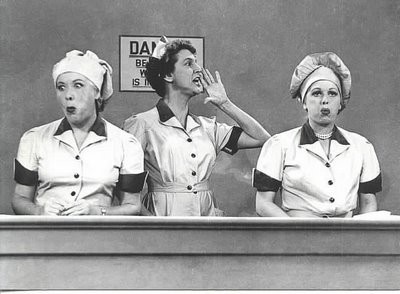
Today the school day summons up the memory of a favorite episode of “I Love Lucy.” Each of us remembers the plight of Lucy Ricardo and Ethel Murtz in the candy factory. As the conveyor belt speeds up, Lucy & Ethel fail to keep up with wrapping and boxing the candy at the desired speed.

She stuffs some candy in her pockets, conceals some in the folds of her dress, eats a few pieces and discards others. Her short stint on the assembly line is hilarious and the skit rightfully belongs in the annals of classic comedy.

That we routinely subject teachers and students to such treatment is a tragedy for modern times.

Further Reading: Dismissing the Factory Model School


[The original version of this “Viewpoint” appeared in the now defunct The Prince George’s County Journal on June 4, 2003. It has been revised for readability. This still is from the Lucille Ball on-line archive.]